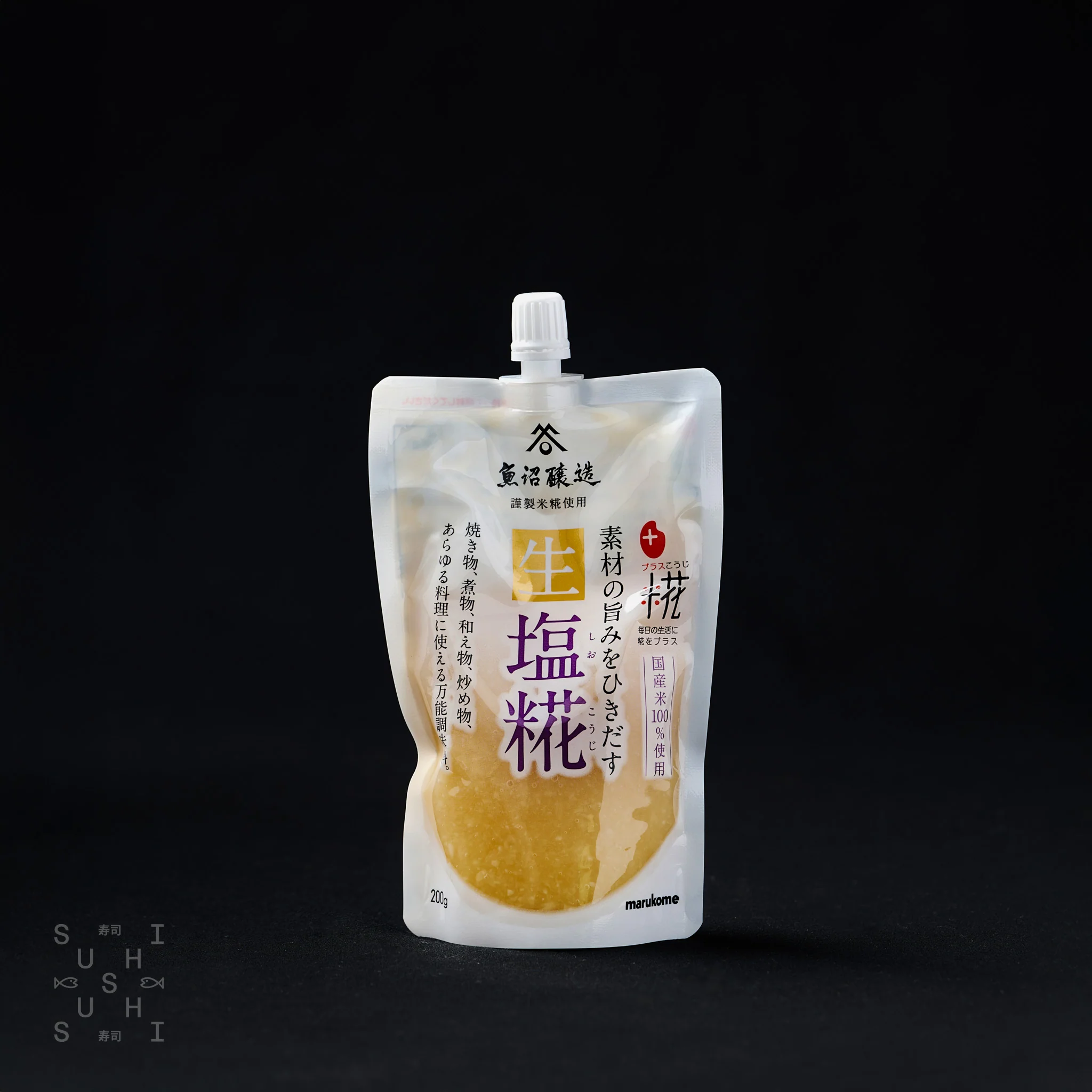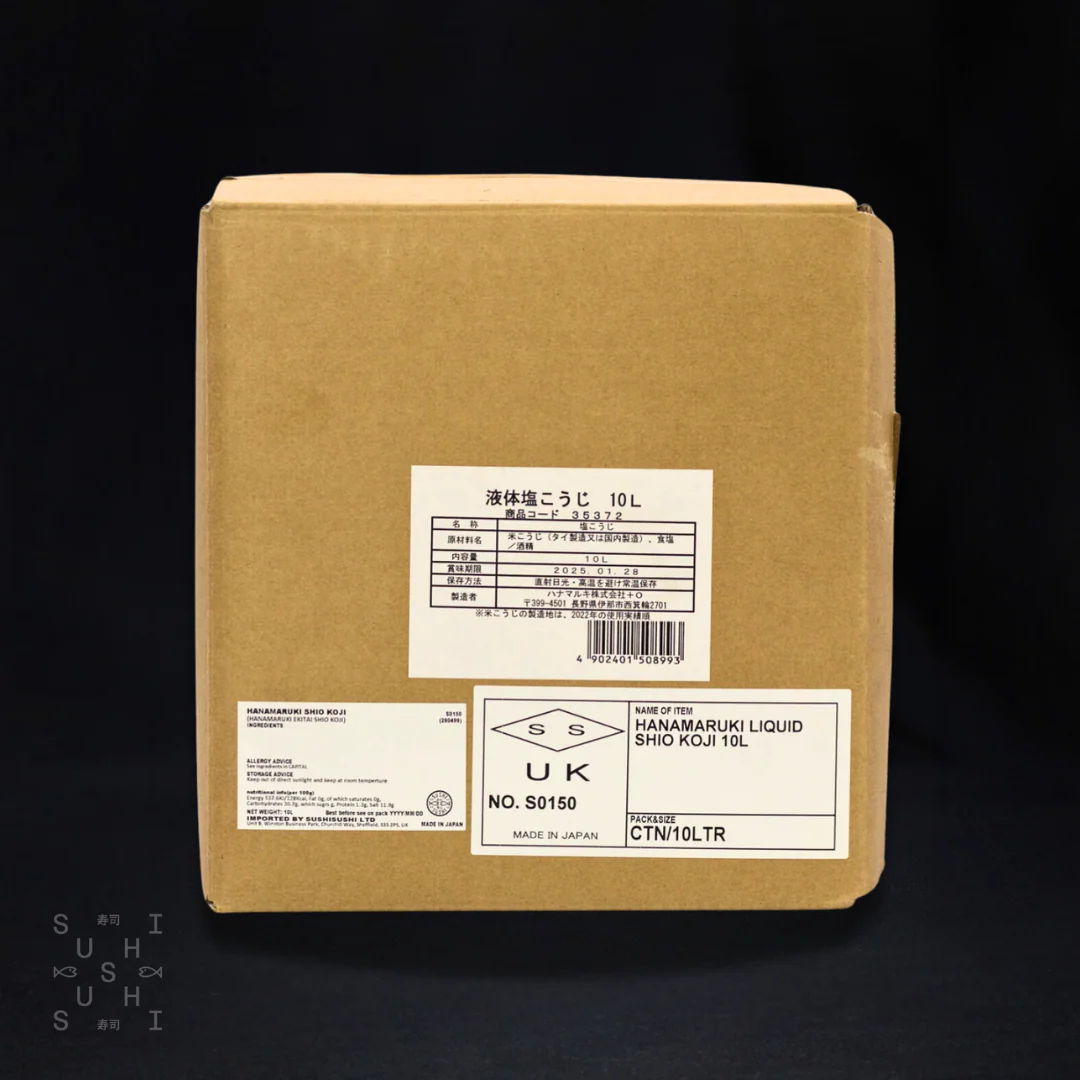
Hanamaruki, Liquid Shio Koji, 10L
A strained, pourable salt koji that seasons and tenderises in one step, packed 10 litres for the working kitchen.
Why Chefs Choose This
- Tenderises as it seasons: the koji's proteases break protein down into amino acids, softening meat and fish while building umami.
- Rounded, not just salty: its amylases turn rice starch into sugar during fermentation, so it brings a gentle natural sweetness alongside the salt.
- One ingredient, many jobs: a single salt koji stands in for plain salt while adding savoury depth across marinades, dressings and braises.
- Built for the line: a 10 litre strained liquid, ambient storage and an 18-month shelf life, easy to portion and measure.
How to Use
- Classic marinade: coat chicken, pork or firm white fish and rest before grilling, letting the koji tenderise and deepen flavour.
- Salt swap: use in place of plain salt in dressings, soups and brines, where the strained liquid stirs in cleanly.
- Beyond Japanese cooking: brush over roast vegetables, fold into a compound butter, or season a risotto or ragù where you would reach for salt.
- Pickling and dips: use as a quick pickling medium for vegetables, or as the savoury base for a dipping sauce.
Shio koji (塩麹) means simply "salt koji": 塩 (shio, salt) and 麹 (koji), the mould Aspergillus oryzae grown on steamed grain, usually rice. Koji is the enzymatic engine behind Japan's core ferments, as sake, miso and soy sauce all begin with it. Shio koji puts that engine to work directly. Koji, salt and water are left to ferment at room temperature for roughly one to three weeks, and the mould's enzymes do the rest, with amylases turning rice starch into sweetness and proteases turning protein into glutamate-rich umami. Hanamaruki, a Japanese koji and miso specialist, supplies this in strained liquid form (液体塩麹), so the seasoning pours and measures cleanly for kitchen use.
Learn more: What Is Shio Koji and What Is It Used For?
What does shio koji taste like?
Shio koji leads with a soft, savoury depth rather than sharp salt. The koji's proteases release amino acids including glutamate, so the first note is umami, the same rounded savouriness you find in miso and soy sauce. Behind it sits a gentle sweetness, because the koji's amylases convert the rice starch into sugar as it ferments. The salt is present but mellowed, seasoning without the hard edge of plain salt. In this strained liquid form it is smooth and pourable rather than pasty, which lets it coat and soak into food evenly. Used on protein, it softens texture at the same time as it seasons.
| Type | 塩麹 (shio koji, "salt koji"), supplied in strained liquid form (液体塩麹) |
| Brand | Hanamaruki, a Japanese koji and miso specialist |
| Key Feature | Strained liquid salt koji that seasons, sweetens and tenderises in a single step |
| Origin | Japan |
| Format | 10 litre (10,000 ml) foodservice pack, ambient storage, 18-month shelf life |
| Best Used As | Marinade, all-purpose salt replacement, dressing and pickling base |
What is the difference between shio koji and miso?
Both begin with koji, the mould Aspergillus oryzae grown on grain, but they are built differently. Miso ferments koji together with cooked soybeans and salt over months, producing a thick paste with body and colour. Shio koji is just koji, salt and water, fermented for roughly one to three weeks, so it is lighter and milder and used as a seasoning rather than a paste base. In the kitchen, miso brings depth to soups, glazes and braises, while shio koji works as a salt replacement and a marinade that also tenderises protein.
Is shio koji salty or sweet?
Both, in balance. Salt is the seasoning and preservative, typically around 10 to 13 percent by weight in shio koji generally, but the koji's amylase enzymes convert rice starch into sugar during fermentation, so a natural sweetness runs alongside the salt. Its proteases also release amino acids, which read as umami. The result seasons like salt but tastes rounder and deeper, which is why it works as a one-pour replacement for plain salt in dressings, soups and marinades.
How do I use shio koji as a marinade?
Coat the protein in a thin layer and rest it, refrigerated, before cooking. Chicken, pork and firm white fish all work well. The koji's proteases break protein down into amino acids, which tenderises the meat and builds savoury depth, while its amylases add a light sweetness that helps colour form on the grill or in the pan. Wipe off any excess before cooking so it does not catch. Because this form is strained, it coats evenly and comes off cleanly.
Original: $205.00
-65%$205.00
$71.75Hanamaruki, Liquid Shio Koji, 10L
A strained, pourable salt koji that seasons and tenderises in one step, packed 10 litres for the working kitchen.
Why Chefs Choose This
- Tenderises as it seasons: the koji's proteases break protein down into amino acids, softening meat and fish while building umami.
- Rounded, not just salty: its amylases turn rice starch into sugar during fermentation, so it brings a gentle natural sweetness alongside the salt.
- One ingredient, many jobs: a single salt koji stands in for plain salt while adding savoury depth across marinades, dressings and braises.
- Built for the line: a 10 litre strained liquid, ambient storage and an 18-month shelf life, easy to portion and measure.
How to Use
- Classic marinade: coat chicken, pork or firm white fish and rest before grilling, letting the koji tenderise and deepen flavour.
- Salt swap: use in place of plain salt in dressings, soups and brines, where the strained liquid stirs in cleanly.
- Beyond Japanese cooking: brush over roast vegetables, fold into a compound butter, or season a risotto or ragù where you would reach for salt.
- Pickling and dips: use as a quick pickling medium for vegetables, or as the savoury base for a dipping sauce.
Shio koji (塩麹) means simply "salt koji": 塩 (shio, salt) and 麹 (koji), the mould Aspergillus oryzae grown on steamed grain, usually rice. Koji is the enzymatic engine behind Japan's core ferments, as sake, miso and soy sauce all begin with it. Shio koji puts that engine to work directly. Koji, salt and water are left to ferment at room temperature for roughly one to three weeks, and the mould's enzymes do the rest, with amylases turning rice starch into sweetness and proteases turning protein into glutamate-rich umami. Hanamaruki, a Japanese koji and miso specialist, supplies this in strained liquid form (液体塩麹), so the seasoning pours and measures cleanly for kitchen use.
Learn more: What Is Shio Koji and What Is It Used For?
What does shio koji taste like?
Shio koji leads with a soft, savoury depth rather than sharp salt. The koji's proteases release amino acids including glutamate, so the first note is umami, the same rounded savouriness you find in miso and soy sauce. Behind it sits a gentle sweetness, because the koji's amylases convert the rice starch into sugar as it ferments. The salt is present but mellowed, seasoning without the hard edge of plain salt. In this strained liquid form it is smooth and pourable rather than pasty, which lets it coat and soak into food evenly. Used on protein, it softens texture at the same time as it seasons.
| Type | 塩麹 (shio koji, "salt koji"), supplied in strained liquid form (液体塩麹) |
| Brand | Hanamaruki, a Japanese koji and miso specialist |
| Key Feature | Strained liquid salt koji that seasons, sweetens and tenderises in a single step |
| Origin | Japan |
| Format | 10 litre (10,000 ml) foodservice pack, ambient storage, 18-month shelf life |
| Best Used As | Marinade, all-purpose salt replacement, dressing and pickling base |
What is the difference between shio koji and miso?
Both begin with koji, the mould Aspergillus oryzae grown on grain, but they are built differently. Miso ferments koji together with cooked soybeans and salt over months, producing a thick paste with body and colour. Shio koji is just koji, salt and water, fermented for roughly one to three weeks, so it is lighter and milder and used as a seasoning rather than a paste base. In the kitchen, miso brings depth to soups, glazes and braises, while shio koji works as a salt replacement and a marinade that also tenderises protein.
Is shio koji salty or sweet?
Both, in balance. Salt is the seasoning and preservative, typically around 10 to 13 percent by weight in shio koji generally, but the koji's amylase enzymes convert rice starch into sugar during fermentation, so a natural sweetness runs alongside the salt. Its proteases also release amino acids, which read as umami. The result seasons like salt but tastes rounder and deeper, which is why it works as a one-pour replacement for plain salt in dressings, soups and marinades.
How do I use shio koji as a marinade?
Coat the protein in a thin layer and rest it, refrigerated, before cooking. Chicken, pork and firm white fish all work well. The koji's proteases break protein down into amino acids, which tenderises the meat and builds savoury depth, while its amylases add a light sweetness that helps colour form on the grill or in the pan. Wipe off any excess before cooking so it does not catch. Because this form is strained, it coats evenly and comes off cleanly.
Product Information
Product Information
Shipping & Returns
Shipping & Returns
Description
A strained, pourable salt koji that seasons and tenderises in one step, packed 10 litres for the working kitchen.
Why Chefs Choose This
- Tenderises as it seasons: the koji's proteases break protein down into amino acids, softening meat and fish while building umami.
- Rounded, not just salty: its amylases turn rice starch into sugar during fermentation, so it brings a gentle natural sweetness alongside the salt.
- One ingredient, many jobs: a single salt koji stands in for plain salt while adding savoury depth across marinades, dressings and braises.
- Built for the line: a 10 litre strained liquid, ambient storage and an 18-month shelf life, easy to portion and measure.
How to Use
- Classic marinade: coat chicken, pork or firm white fish and rest before grilling, letting the koji tenderise and deepen flavour.
- Salt swap: use in place of plain salt in dressings, soups and brines, where the strained liquid stirs in cleanly.
- Beyond Japanese cooking: brush over roast vegetables, fold into a compound butter, or season a risotto or ragù where you would reach for salt.
- Pickling and dips: use as a quick pickling medium for vegetables, or as the savoury base for a dipping sauce.
Shio koji (塩麹) means simply "salt koji": 塩 (shio, salt) and 麹 (koji), the mould Aspergillus oryzae grown on steamed grain, usually rice. Koji is the enzymatic engine behind Japan's core ferments, as sake, miso and soy sauce all begin with it. Shio koji puts that engine to work directly. Koji, salt and water are left to ferment at room temperature for roughly one to three weeks, and the mould's enzymes do the rest, with amylases turning rice starch into sweetness and proteases turning protein into glutamate-rich umami. Hanamaruki, a Japanese koji and miso specialist, supplies this in strained liquid form (液体塩麹), so the seasoning pours and measures cleanly for kitchen use.
Learn more: What Is Shio Koji and What Is It Used For?
What does shio koji taste like?
Shio koji leads with a soft, savoury depth rather than sharp salt. The koji's proteases release amino acids including glutamate, so the first note is umami, the same rounded savouriness you find in miso and soy sauce. Behind it sits a gentle sweetness, because the koji's amylases convert the rice starch into sugar as it ferments. The salt is present but mellowed, seasoning without the hard edge of plain salt. In this strained liquid form it is smooth and pourable rather than pasty, which lets it coat and soak into food evenly. Used on protein, it softens texture at the same time as it seasons.
| Type | 塩麹 (shio koji, "salt koji"), supplied in strained liquid form (液体塩麹) |
| Brand | Hanamaruki, a Japanese koji and miso specialist |
| Key Feature | Strained liquid salt koji that seasons, sweetens and tenderises in a single step |
| Origin | Japan |
| Format | 10 litre (10,000 ml) foodservice pack, ambient storage, 18-month shelf life |
| Best Used As | Marinade, all-purpose salt replacement, dressing and pickling base |
What is the difference between shio koji and miso?
Both begin with koji, the mould Aspergillus oryzae grown on grain, but they are built differently. Miso ferments koji together with cooked soybeans and salt over months, producing a thick paste with body and colour. Shio koji is just koji, salt and water, fermented for roughly one to three weeks, so it is lighter and milder and used as a seasoning rather than a paste base. In the kitchen, miso brings depth to soups, glazes and braises, while shio koji works as a salt replacement and a marinade that also tenderises protein.
Is shio koji salty or sweet?
Both, in balance. Salt is the seasoning and preservative, typically around 10 to 13 percent by weight in shio koji generally, but the koji's amylase enzymes convert rice starch into sugar during fermentation, so a natural sweetness runs alongside the salt. Its proteases also release amino acids, which read as umami. The result seasons like salt but tastes rounder and deeper, which is why it works as a one-pour replacement for plain salt in dressings, soups and marinades.
How do I use shio koji as a marinade?
Coat the protein in a thin layer and rest it, refrigerated, before cooking. Chicken, pork and firm white fish all work well. The koji's proteases break protein down into amino acids, which tenderises the meat and builds savoury depth, while its amylases add a light sweetness that helps colour form on the grill or in the pan. Wipe off any excess before cooking so it does not catch. Because this form is strained, it coats evenly and comes off cleanly.